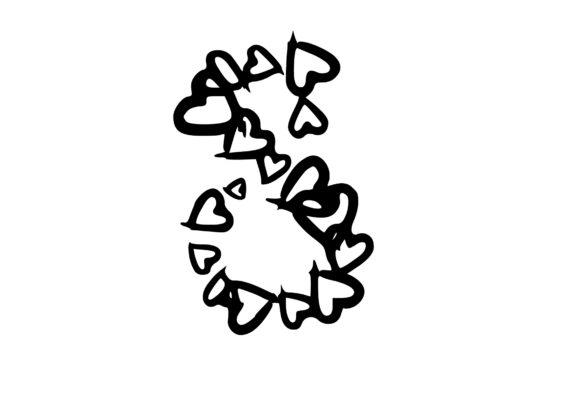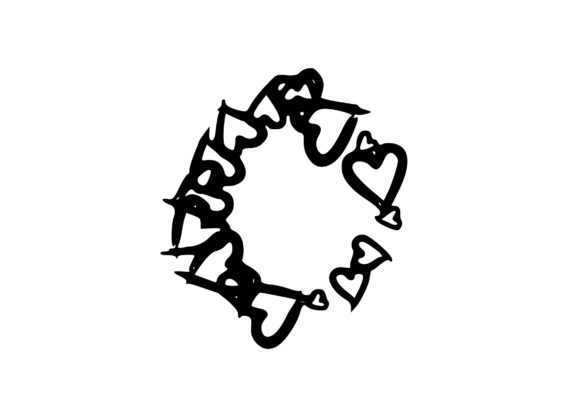
Heart Font 'O' Mono Letter: A Practical Guide to Integrating Cute Typography into Professional and Personal Workflows
In the landscape of digital design, typography often serves as the silent architect of user experience. While serious professionals might default to clean sans-serifs for corporate branding, there is a distinct niche where personality drives engagement: projects targeting heart lovers, cute kids, boy-girl friends, and couples. This is where the Heart Font 'O' Mono Letter becomes an essential asset. It is not merely a decorative element; it is a strategic tool that bridges the gap between professional execution and emotional resonance.
Understanding how to integrate this specific font requires looking beyond its visual appeal. For creators, entrepreneurs, and educators, the value lies in its versatility across different file formats and its ability to maintain consistency within complex workflows. Whether you are preparing assets for a small business launch or organizing a creative project for a personal goal, knowing the technical specifications and practical applications of the Heart Font 'O' Mono Letter ensures that your final output meets both aesthetic and functional standards.
Defining the Asset and Its Role in Creative Processes
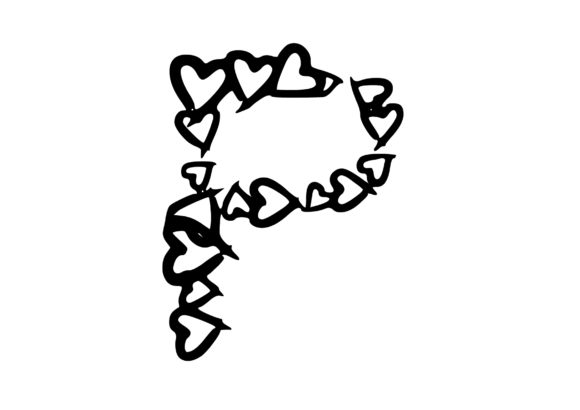
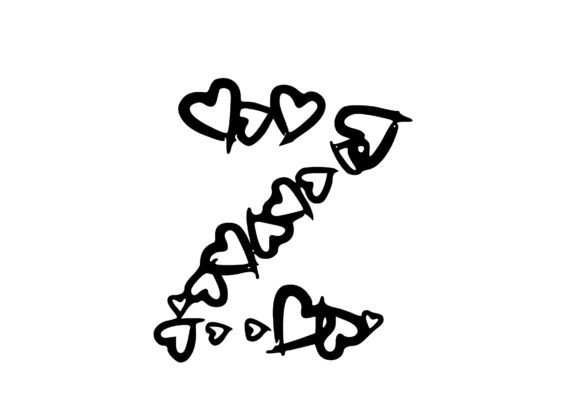
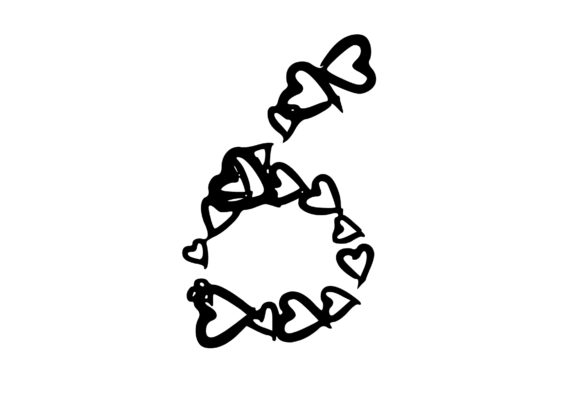
The Heart Font 'O' Mono Letter is a specialized typeface designed to convey affection and playfulness through a structured, monospaced format. Unlike standard cursive scripts that can be difficult to read at scale, the mono-letter style offers clarity while retaining a whimsical character. This makes it particularly effective for audiences ranging from young children to adults who appreciate a touch of nostalgia in their digital interactions.
For professionals managing multiple projects, this font fits into the broader process during the conceptualization and production phases. When planning a campaign for Valentine's Day, a baby shower, or a couple's merchandise line, the decision to use this font signals a shift in tone. It tells the audience that the content is approachable and warm. However, successful implementation depends on understanding the specific file types provided, as each serves a unique purpose in the production pipeline.
The asset package includes three primary formats, each optimized for different stages of the workflow:
- EPS (Encapsulated PostScript): This vector-based format is critical for scalability. When working with large-format printing or needing to resize graphics without losing quality, the EPS file is the starting point. It allows designers to manipulate the curves of the letter 'O' within software like Adobe Illustrator without pixelation.
- PNG (Portable Network Graphics): Provided at 3508x2480px with a resolution of 300 dpi in RGB color space, this high-resolution raster image is ideal for print-ready materials. The 300 dpi specification ensures that when used in brochures, posters, or high-quality packaging, the edges remain crisp. The RGB setting indicates it is prepared for screens and modern printers that support wide color gamuts.
- JPG (Joint Photographic Experts Group): At 1754x1240px with 72 dpi in CMYK mode, this version is tailored for standard web publishing and offset printing. The lower resolution saves bandwidth for websites, while the CMYK conversion ensures color accuracy when moving to physical media like flyers or business cards.
Strategic Integration Before Project Execution
Before opening any design software, the preparation phase determines the efficiency of the entire project. If you are a freelancer or a small business owner, integrating the Heart Font 'O' Mono Letter early in the planning stage prevents costly revisions later. For instance, if you are creating a marketing plan for a children's product line, selecting this font during the initial mood board phase establishes a consistent visual language.
Consider the compatibility factors. Since the font is available in both RGB and CMYK variants, you must decide your output destination before purchasing or downloading. If your primary goal is social media marketing, the JPG version at 72 dpi is sufficient and reduces file size, improving load times. Conversely, if you are producing physical greeting cards or t-shirts, the 300 dpi PNG or the scalable EPS file is non-negotiable. Making this decision upfront streamlines the procurement process and ensures you have the right tools for the job.
Executing the Workflow: From Concept to Final Output
Once the asset is secured, the focus shifts to execution. The Heart Font 'O' Mono Letter interacts seamlessly with various design platforms, but the key to success lies in maintaining quality control throughout the editing process. For example, when using the EPS file in a vector editor, you can group the letter with other elements to create custom logos or badges. Because it is a mono letter, aligning text blocks becomes easier, ensuring that spacing remains uniform even when mixed with other fonts.
In the context of educational resources, this font can be utilized during the creation of learning materials. Teachers and homeschoolers often need to make worksheets engaging for young students. By incorporating the Heart Font 'O' Mono Letter into headers or activity titles, educators can capture attention without sacrificing readability. The process here involves importing the PNG or JPG into document editors like Canva or Microsoft Word, adjusting opacity if necessary, and ensuring the background contrast supports the text.
For marketers and bloggers, the integration happens during content distribution. The 3508x2480px PNG is perfect for featured images on blogs or Pinterest pins, where high resolution is required to prevent blurring on retina displays. The workflow involves optimizing the image for web use by compressing it slightly without dropping below the 72 dpi threshold for screen viewing, while keeping the original high-res files archived for future re-use. This organization ensures that assets are never lost and can be quickly deployed for new campaigns.
Navigating Technical Constraints and Best Practices
Efficiency in design is often about navigating constraints. When working with the Heart Font 'O' Mono Letter, one common challenge is color management. The provided files come in different color spaces (RGB vs. CMYK). If you take an RGB file intended for screens and send it directly to a commercial printer expecting CMYK, the colors may appear duller than anticipated. To avoid this, always verify the color profile of the file against your output device. The JPG version provided is already converted to CMYK, making it a safer choice for print-on-demand services.
Furthermore, consistency is vital for brand identity. If you are building a long-term project, such as a series of books for kids or a recurring newsletter for couples, do not mix the Heart Font 'O' Mono Letter with too many competing styles. Use it as a focal point. Pair it with a simple, neutral sans-serif for body text to ensure that the playful nature of the 'O' does not overwhelm the information being conveyed. This balance enhances usability and keeps the audience engaged without causing visual fatigue.
Another aspect of practical implementation is file organization. Given the variety of formats, creating a dedicated folder structure is recommended. Separate folders for "Vector Assets," "High-Res Print," and "Web Optimization" allow for quick access during tight deadlines. This organizational habit is crucial for productivity-minded users who manage multiple clients or projects simultaneously. It reduces the time spent searching for the correct file version and minimizes the risk of using a low-resolution image in a high-stakes presentation.
Long-Term Value and Adaptability
The utility of the Heart Font 'O' Mono Letter extends beyond a single project. Its adaptability makes it a valuable component of a creator's long-term toolkit. As trends shift, the core function of the font remains relevant because it addresses fundamental human desires for connection and playfulness. Whether you are updating an old website, launching a new product line, or simply creating a personalized gift, the font provides a reliable visual anchor.
For entrepreneurs, this asset represents a low-cost, high-impact investment. Instead of commissioning a custom logo for every small initiative, utilizing pre-made, high-quality assets like the Heart Font 'O' Mono Letter allows for rapid prototyping and testing. You can iterate on designs quickly, gauge audience response, and refine your strategy without incurring significant overhead costs. This agility is essential in today's fast-paced market.
Ultimately, the success of integrating this font depends on thoughtful application. It is not enough to simply paste the image onto a canvas. One must consider the context, the medium, and the message. Does the playful nature of the font align with the seriousness of the content? Is the resolution appropriate for the intended display? By answering these questions, professionals and hobbyists alike can leverage the Heart Font 'O' Mono Letter to enhance their work, creating outputs that are not only visually appealing but also technically sound and strategically effective.
As you move forward with your next creative endeavor, remember that the right tools simplify the process. The Heart Font 'O' Mono Letter, with its comprehensive file suite and charming design, offers a robust solution for anyone looking to add a touch of love and cuteness to their digital or physical creations. By treating it as a versatile component of your workflow rather than just a decoration, you unlock its full potential to communicate effectively with your audience.