Britania: Evaluating the Distinctive Appeal of a Handwritten Typeface
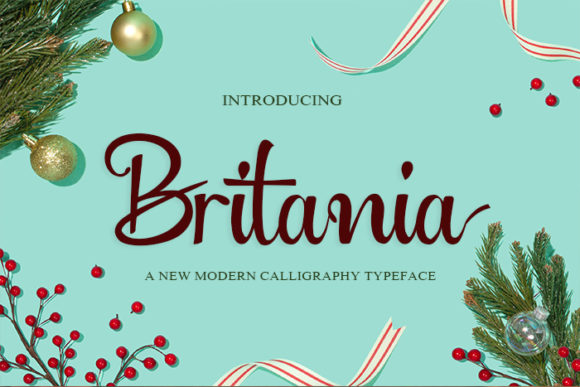
In the crowded landscape of digital typography, selecting the right typeface often feels like navigating a maze of similar options. Designers frequently struggle to find a font that balances legibility with genuine personality. This is where Britania emerges as a compelling option for those seeking an elegant and distinct handwritten aesthetic. Unlike standard sans-serif or serif fonts that dominate corporate communication, Britania offers a fluid, organic quality that can transform a static layout into something dynamic and human.
However, before committing to a specific typeface for a project, it is essential to understand its technical underpinnings and how it fits within the broader context of design tools. For professionals aged 20 to 50 who are evaluating resources for branding, editorial work, or creative projects, knowing the nuances of PUA encoding and glyph accessibility is crucial. This evaluation explores what makes Britania distinct, how it compares to alternative handwritten styles, and when it serves as the optimal choice versus when other solutions might be more appropriate.
Understanding the Technical Architecture of Britania
The primary differentiator of Britania lies in its encoding structure. Standard fonts often rely on basic character mappings, which can limit the availability of stylistic alternates, ligatures, and decorative swashes. In contrast, Britania utilizes PUA (Private Use Area) encoding. This technical approach allows the font to access a vast library of glyphs and swashes without conflicting with standard ASCII characters.
For the designer, this means you can access all of the glyphs and swashes with ease, provided your software supports OpenType features or specific substitution rules. The result is a font that does not feel static. When you add Britania to your designs, the subtle variations in stroke weight and the presence of unique flourishes make them come alive in ways that standard fonts cannot achieve. This level of detail is particularly valuable in contexts where brand identity relies on a sense of craftsmanship or personal touch.
- Accessibility: PUA encoding ensures that specialized characters do not break layouts or display as missing boxes on most modern systems.
- Variety: The extensive glyph set allows for significant visual variation even within short lines of text.
- Integration: It functions well alongside standard system fonts, acting as a high-impact accent rather than a background element.
Comparing Britania to Standard Handwritten Alternatives
When evaluating handwritten typefaces, designers often compare options based on readability, consistency, and the "human" feel they convey. Britania occupies a specific niche between casual script and formal calligraphy. Many alternatives in the market fall into two extremes: those that are too messy to read at small sizes, or those that look too rigid and mechanical to be truly "handwritten."
Britania strikes a balance by maintaining the irregularity of a hand-drawn letter while ensuring that the core shapes remain recognizable. Compared to generic brush scripts, which often suffer from inconsistent spacing and heavy ink traps, Britania offers a cleaner baseline. This makes it more versatile for professional applications where clarity is paramount. However, this cleanliness comes with a tradeoff; if a project requires the chaotic energy of street art or the extreme fluidity of a marker pen, Britania might feel slightly too controlled.
Furthermore, when compared to variable fonts—a growing category that allows users to adjust weight and width dynamically—Britania relies on its rich glyph set rather than continuous axis manipulation. While variable fonts offer flexibility in weight, Britania offers flexibility in style through its swashes and alternate characters. The decision often depends on whether the project needs tonal shifts (weight) or stylistic shifts (decoration).
Readability vs. Aesthetic Impact
A critical factor in choosing any handwritten font is the tension between aesthetics and readability. In long-form content, such as body copy for a blog or article, highly stylized fonts are generally discouraged. Britania is best utilized for headlines, pull quotes, or short captions. Its distinct nature commands attention, but it can fatigue the eye if used excessively.
Alternatives designed specifically for body text often prioritize uniformity over flair. They sacrifice the unique quirks of handwriting for the sake of smooth reading rhythms. If your goal is to create a warm, inviting atmosphere without sacrificing comprehension, Britania works well as a supporting player. Pairing it with a neutral sans-serif creates a hierarchy that guides the reader's eye effectively.
Evaluating Strengths and Tradeoffs
No single typeface is a universal solution. To make an informed decision, one must weigh the strengths of Britania against its limitations. Understanding these factors helps determine if it aligns with the specific goals of a project.
The greatest strength of Britania is its ability to evoke emotion. It brings a sense of intimacy and authenticity to a design. In an era where digital content can feel sterile and mass-produced, the handwritten quality of Britania provides a necessary counterbalance. It suggests that a human was behind the creation of the content, fostering trust and connection with the audience.
However, there are tradeoffs to consider. The reliance on PUA encoding means that compatibility can vary depending on the software version and operating system. While modern web browsers handle OpenType features well, older versions of design software or specific print workflows might require additional configuration to ensure all swashes render correctly. Additionally, because the font is so distinct, it has a strong voice. Using it for every headline in a publication can lead to visual monotony, as the lack of contrast between different headings can dilute the impact of the overall design.
Best-Fit Situations and Decision Factors
Determining when to use Britania requires a clear understanding of the project's context. It is not merely about liking the look of the letters; it is about whether the font serves the functional purpose of the design.
Ideal Use Cases:
- Branding and Logos: For businesses wanting to emphasize artisanal quality, such as bakeries, boutiques, or craft studios, Britania adds immediate character.
- Editorial Headlines: Magazine covers and feature articles benefit from the elegance of a handwritten title that stands out against clean body text.
- Invitations and Event Materials: The personal touch of the font aligns perfectly with weddings, parties, and exclusive events.
- Social Media Graphics: Short, punchy messages on Instagram or Pinterest often require fonts that grab attention quickly, a task Britania excels at.
Limited Use Cases:
Conversely, there are scenarios where Britania may not be the right choice. For legal documents, technical manuals, or data-heavy dashboards, the ornamental nature of the font could undermine the perceived seriousness and objectivity of the information. Similarly, for international audiences where cultural associations with handwriting vary, a more neutral typeface might be safer to avoid unintended interpretations.
Making the Final Choice
The process of selecting a typeface is rarely binary. It involves testing, iteration, and a deep consideration of the target audience. For those comparing options, the key is to ask what the design needs to communicate. If the message is about tradition, elegance, and human connection, Britania is a powerful tool. Its PUA-encoded versatility allows for customization that few other fonts can match, giving designers the freedom to tweak the look of their work without leaving the font family.
Ultimately, adding Britania to your designs is about making them come alive with a specific kind of energy. It is not just a font; it is a design element that carries weight and history. By understanding its technical capabilities and recognizing where it fits within the spectrum of design styles, professionals can leverage its unique properties to create work that resonates. Whether used as a standalone statement or paired with more utilitarian typefaces, Britania offers a distinct path forward for those looking to elevate their visual storytelling.
As you move forward with your next project, consider the role of typography in your narrative. Don't just choose a font because it looks good in isolation; choose it because it enhances the message. For projects requiring a blend of sophistication and personal flair, Britania stands out as a robust and elegant candidate worthy of serious consideration.