Adaptive Logo for Asian Food
In a digital-first marketplace where a brand's first impression often happens on a tiny smartphone screen before it ever lands on a physical menu, the versatility of your visual identity is no longer optional—it is essential. This is where an Adaptive Logo for Asian Food becomes more than just a graphic; it transforms into a strategic asset capable of navigating the complexities of modern commerce. The concept goes beyond simple scalability. It represents a cohesive system designed to maintain integrity and impact whether it appears as a high-resolution billboard in a bustling city center or as a favicon in a browser tab.
The core philosophy behind this adaptive approach is resilience. A static logo that works well in one context often fails in another, leading to blurry images, stretched proportions, or a loss of detail. By utilizing an adaptive design strategy, businesses ensure that their corporate identity remains sharp and recognizable across every touchpoint. This includes business cards, souvenir products, outdoor advertising, and electronic version icons. The flexibility provided by formats like PNG, JPG, EPS, AI, and PDF ensures that the brand can adapt to any medium without compromising quality.
The Evolution of Brand Characters in the Food Industry
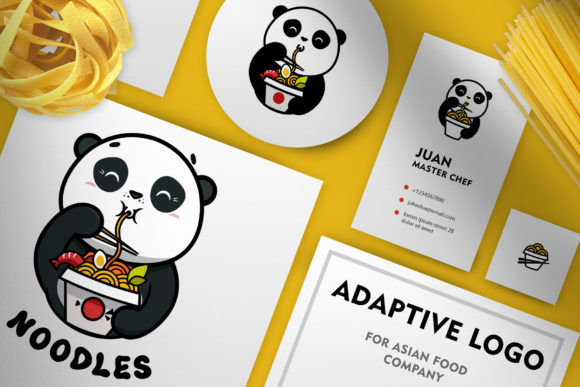
Gone are the days when restaurant branding relied solely on stylized text or generic imagery of chopsticks and bowls. Modern consumers, particularly those aged 20 to 50, crave personality and connection. They want to know the story behind the food. This shift has given rise to the importance of a fictional hero within a brand's ecosystem. In this specific case, the main image of the advertising campaign centers around a brand character: a cute panda eating noodles.
This "Funny panda with vermicelli" is not merely a decorative element; it is one of the most active elements of corporate identity. The character serves as a memorable hook that allows the company to stand out in a saturated market. When potential customers see a panda enjoying a bowl of noodles, they immediately associate the brand with warmth, authenticity, and a touch of humor. This emotional connection is crucial for building loyalty. Whether used on posters, banners, business cards, or packaging, the character acts as a consistent face for the brand, making the dining experience feel more personal and inviting.
The adaptability of this character is what truly sets it apart. Because the logo is adaptive, the panda can be rendered in various sizes without losing its charm. On a large outdoor banner, the details of the noodle bowl and the panda's expression are crisp and clear. On a small mobile app icon, the silhouette remains distinct and instantly recognizable. This consistency builds trust, as customers encounter the same friendly face regardless of where they interact with the brand.
Bridging Physical and Digital Realities
One of the most significant challenges for food businesses today is maintaining a unified presence across both physical and digital channels. An adaptive logo solves this by ensuring that the visual language remains constant. For instance, the ability to use the logo on souvenir products creates a tangible extension of the brand. Imagine a customer taking home a branded t-shirt or a mug featuring the funny panda; these items become walking advertisements that extend the reach of the marketing campaign far beyond the restaurant walls.
Similarly, the demand for high-quality outdoor advertising cannot be met with low-resolution files. The adaptive nature of this logo ensures that it performs exceptionally well in large-scale print runs. The vector-based formats included in the package allow designers to scale the artwork infinitely without pixelation. This is vital for billboards, storefront signage, and vehicle wraps, where clarity at a distance is paramount. The inclusion of pattern variations further enhances this capability, allowing for creative backgrounds that complement the main logo without overwhelming it.
On the digital front, the requirements are equally demanding. Social media profiles, email signatures, and website headers all require specific file types and resolutions. The package provides optimized versions in PNG and JPG formats, complete with transparent backgrounds where necessary. This means that marketers can drop the logo into any design software or web layout without worrying about white boxes or jagged edges. The availability of a PDF version also facilitates easy sharing and printing for internal communications or quick client presentations.
Technical Flexibility and Creative Freedom
For professionals such as graphic designers, freelancers, and in-house marketing teams, the technical specifications of a logo package are just as important as the creative design itself. The Adaptive Logo for Asian Food comes prepared with a comprehensive suite of files to accommodate various workflows. The ZIP archive contains four adapted logos, each available in multiple sizes, ensuring that there is always a perfect fit for any project.
The inclusion of PSD (Photoshop) files offers non-destructive editing capabilities, allowing users to adjust layers, colors, and effects while preserving the original structure. For those who prefer vector-based precision, the EPS10 and AI files are invaluable. These formats open seamlessly in Adobe Illustrator, enabling designers to manipulate shapes, curves, and paths with absolute control. The AI format specifically supports the creation of complex patterns, which can be used to create unique textures for packaging or background designs.
Furthermore, the fact that text can be edited and fonts changed adds a layer of customization that is often overlooked. While the core identity remains intact, businesses can tweak the typography to match seasonal promotions or local dialects without needing to recreate the entire logo from scratch. This flexibility is a time-saver and a cost-saver, empowering creators to tailor the brand voice to specific audiences while maintaining overall brand consistency.
Understanding the File Ecosystem
To maximize the utility of this asset, it is helpful to understand how different file types serve different purposes. As noted in the technical specifications, EPS and AI clipart are best opened with Illustrator, which is ideal for print production and vector manipulation. Conversely, PNG clipart is optimized for Photoshop and raster-based editing, making it perfect for web graphics, social media posts, and photo composites. The JPG format offers compressed, universally compatible images suitable for quick previews or email attachments, while the PDF ensures that documents look the same on any device.
It is important to note what is not included in the package to manage expectations effectively. Fonts and mockups are excluded, meaning users must source their own typefaces if they wish to deviate from the default or need to test the logo in realistic scenarios. However, the exclusion of these elements keeps the core package lightweight and focused on the essential assets required for a robust brand identity. Users should be aware that proper software is required to access the full potential of the vector files, but the investment in learning these tools pays off in professional output.
Practical Implications for Business Growth
For entrepreneurs and business owners, investing in an adaptive logo is an investment in longevity. Brands that fail to adapt to changing media landscapes risk becoming obsolete. By choosing a solution that covers the spectrum from business cards to outdoor advertising, companies future-proof their visual identity. The funny panda with vermicelli is not just a cute image; it is a versatile tool that can grow with the business.
As the food industry continues to evolve, driven by trends in sustainability, health, and cultural appreciation, having a flexible brand identity allows businesses to pivot quickly. If a restaurant decides to expand its menu, launch a new line of packaged goods, or enter a new geographic market, the adaptive logo can be adjusted to fit the new context without losing its soul. The ability to generate patterns and multiple sizes ensures that the brand can maintain a premium look even as it scales up operations.
Ultimately, the goal is to create a seamless experience for the consumer. From the moment they see a banner on the street to the moment they receive a receipt in their hand, the brand should feel familiar and trustworthy. The Adaptive Logo for Asian Food delivers exactly that. It combines the charm of a beloved character with the technical rigor of modern design standards, providing a solid foundation for any food-related enterprise looking to make a lasting impression.